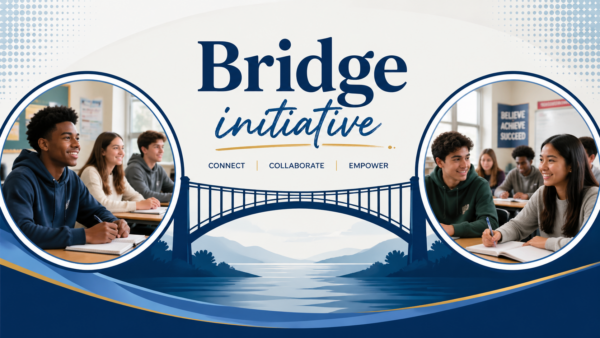
The Bridge Initiative connects students from different communities, regions, and backgrounds to learn with and from one another. Through video conferencing and collaborative projects, students explore both their differences and shared experiences while working together to address real community needs. The program goes beyond academic theory by engaging students in meaningful problem-solving that helps them develop communication, collaboration, leadership, and critical-thinking skills applicable in school, work, and daily life.
The program is grounded in the belief that students learn best when they feel safe, connected, valued, and engaged in meaningful work. By collaborating on authentic projects that serve others, students strengthen empathy, agency, reflection, and purpose while developing greater self-confidence, self-esteem, and a stronger sense of identity and belonging. These experiences help students recognize that their ideas, voices, and contributions matter.
Currently envisioned as a pilot program, the Bridge Initiative reimagines cross-district collaboration by connecting students from different geographic, cultural, and socioeconomic backgrounds. The program creates opportunities for authentic dialogue, shared learning, and mutual understanding. Using an equity-centered, asset-based approach, students work as equal partners, while digital tools help reduce barriers created by distance and unequal access to resources.
The goal of the initiative is not only to strengthen academic learning, but also to help students develop empathy, perspective-taking, civic responsibility, and a stronger sense of connection to others. Success is measured through collaboration, reflection, shared presentations, and the real-world impact of student projects and public exhibitions.
1. Program Framework & Phases
The initiative follows a four-phase structure to move students from personal connection to real-world impact:
- Building rapport through virtual icebreakers and “Asset Mapping” to identify community strengths.
- Identifying shared or divergent community needs via stakeholder interviews.
- Collaborative action on unified projects like environmental campaigns or book drives.
- Final public webinars to present solutions to community members.
2. Overcoming Key Obstacles
The program proactively addresses systemic barriers through intentional design:
- Digital Divide: Uses asynchronous content and community tech hubs to support students with unstable internet.
- Scheduling: Employs rotating meeting times and automated scheduling tools to manage differing school calendars.
- Power Imbalances: Implements an asset-based curriculum where underserved students lead tasks based on their local expertise, ensuring they are seen as experts rather than “recipients of help.”
3. Assessment & Metrics
Success is measured by both the process and the final product:
- Formative: Monitoring digital footprints (contribution history) and peer feedback loops.
- Summative: Multi-dimensional rubrics that grade soft skills like conflict resolution alongside project output.
- Impact: Evaluating real-world utility through community feedback and stakeholder panels.
4. Cultural Diversity & Connection
The initiative prioritizes cultural diversity through deepening connection by:
- Storytelling: Using digital narratives (e.g., “A Day in My Life” videos) to humanize abstract data.
- Perspective-Taking: Engaging in inquiry-based dialogues and simulations to challenge personal biases.
- Linguistic Inclusion: Supporting multilingual materials and valuing diverse languages as academic assets.
Core Philosophy: Success depends on equity-centered design, where technology serves as a bridge rather than a barrier, and every student’s lived experience is treated as essential expertise.


You’re invited to be part of the Bridge Initiative as we develop this project. We are open to designing the project according to the needs and capacity of its participants. Let us know how you’d like to be involved — through in class or after school projects.
Our first steps will be interviewing potential project stewards and providing opportunities to assess the best approach for moving forward. You may opt to help develop a program that is one session or runs over days, weeks, or an entire term.
During our pilot program we plan to document the process for the pupose of analysis and evaluation to help us determione the most effective format for future programs.